When temperatures drop and ice begins to form on branches across Rogers and Bentonville, many homeowners assume their trees are simply dormant and need no attention until spring. But winter is actually one of the most important seasons for tree care in Northwest Arkansas. With our region expecting colder than average temperatures and along with snow and ice this season, understanding proper winter tree maintenance can mean the difference between healthy trees and expensive spring repairs.
Why Winter Is the Best Time for Tree Pruning
Late winter, typically from mid-November through early March in our area, offers the ideal window for most pruning work. During dormancy, trees conserve their energy in the roots and trunk rather than expending it on leaves and new growth. When you prune during this time, you’re not stressing the tree or removing actively photosynthesizing tissues.
There’s another practical reason winter pruning works so well in Northwest Arkansas. Without leaves blocking your view, you can clearly see the structure of your trees. This makes it much easier to identify problem areas like crossing branches, weak unions, and dead wood that could become hazards during our winter storms.
The cold temperatures also provide a natural barrier against pests and diseases. Many of the pathogens and insects that can enter through pruning cuts are dormant or inactive when it’s cold outside. This significantly reduces the risk of infection compared to pruning during the growing season.
What to Look for When Inspecting Your Trees
Before any cutting begins, walk around your property and examine your trees from all angles. Start by looking for obvious problems. Dead or dying branches stand out more clearly in winter and should be removed as soon as possible. These branches can snap under the weight of ice or snow, potentially causing property damage or injury.
Check for broken or damaged branches from previous storms. Even if they didn’t fall completely, damaged branches with split bark or hanging limbs pose a serious risk. Winter weather can finish what the last storm started, so it’s better to remove these hazards proactively.
Pay attention to branches that rub against each other. Over time, this friction wears through the bark and creates an entry point for disease and pests. Removing one of the two branches prevents this damage from continuing.
Look at how branches attach to the trunk. Strong branch unions have wider angles, almost perpendicular to the trunk. Narrow V-shaped unions are structurally weak and prone to splitting, especially under the weight of ice. If you spot these tight unions on smaller branches, consider having them removed before they grow larger and create bigger problems.
Understanding Which Trees to Prune and When
Most deciduous trees in Northwest Arkansas benefit from winter pruning. Oaks, maples, and elms all respond well to dormant season trimming. However, timing matters for oaks specifically. To prevent the spread of oak wilt, it’s best to prune oak trees between November and March when the beetles that spread this disease are inactive.
Spring-flowering trees like dogwoods, redbuds, and magnolias follow different rules. These trees set their flower buds in late summer for the following spring. If you prune them in winter, you’ll be cutting off this spring’s flowers. Wait until right after they bloom to do any trimming, typically within two weeks of flowering.
Some trees naturally “bleed” sap when pruned in winter, particularly maples, birches, and elms. While this can look alarming, it’s just sap flowing from the cut and doesn’t harm the tree. The bleeding will stop on its own as temperatures warm.
Evergreens like pines and spruces rarely need pruning, but if work is necessary, late winter remains the best time. For pines specifically, avoid cutting back beyond the current year’s growth, as they don’t have lateral buds to sprout new branches like other trees.
Proper Pruning Techniques Matter
How you cut is just as important as when and what you cut. Always prune just outside the branch collar, that slightly swollen area where the branch meets the trunk or larger limb. The branch collar contains special cells that help the wound seal and heal properly. Leaving a stub or cutting flush with the trunk both interfere with this natural healing process.
For larger branches over about four inches in diameter, use the three-cut method to prevent bark from tearing. Make your first cut on the underside of the branch, about 12 to 18 inches from the trunk. Cut upward about one-third of the way through the branch. Then make your second cut from the top, a few inches farther out from the first cut. The branch will break cleanly between these two cuts. Finally, remove the remaining stub with a clean cut just outside the branch collar.
Keep your pruning tools sharp and clean. Sharp tools make cleaner cuts that heal faster. While you don’t need to sterilize between every cut on the same tree, wiping tools with rubbing alcohol between trees helps prevent spreading disease.
How Much to Remove
Resist the urge to over-prune your trees. As a general rule, never remove more than 20 to 25 percent of a tree’s canopy in a single pruning session. Removing too much at once weakens the tree and triggers excessive sucker growth in response.
Focus on thinning the canopy rather than just reducing height. Thinning involves selectively removing branches throughout the tree to increase air circulation and light penetration. This approach maintains the tree’s natural shape while improving its health and reducing wind resistance during storms.
Start with the largest problematic branches and work your way down to smaller ones. This helps you see the overall structure as you go and avoid removing too much.
Winter Weather Preparation
Our Northwest Arkansas winters can be unpredictable. One day might bring mild temperatures in the 40s, and the next could drop into single digits with ice accumulation. This variability makes winter pruning both valuable and somewhat tricky.
Try to prune on mild, dry days when temperatures are above freezing. Not only is this more comfortable for you or your tree service crew, but it also helps prevent damage from extreme cold. Never prune when temperatures are expected to drop well below freezing immediately after, as the fresh cuts can suffer freeze damage.
If ice storms are in the forecast, there’s not much you can do at that moment except wait it out. However, properly pruned trees before winter weather arrives stand a much better chance of surviving ice accumulation without major damage. Removing weak branches, opening up dense canopies, and addressing structural issues ahead of time all reduce the risk of storm damage.
Signs You Need Professional Help
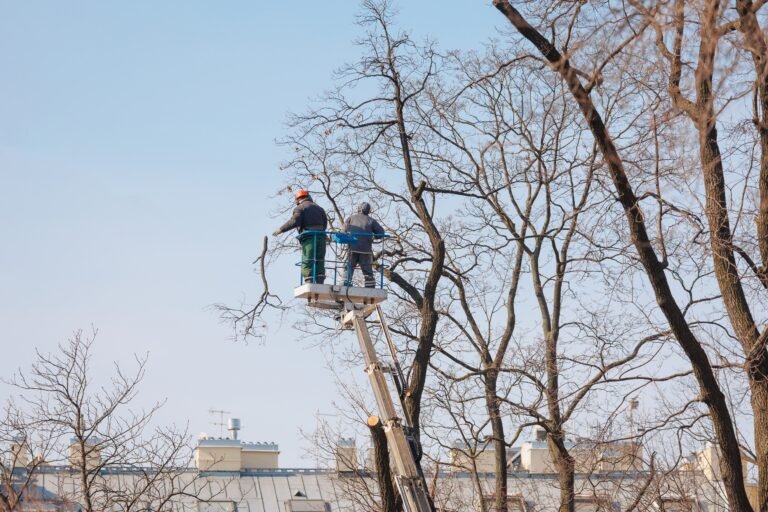
While some minor pruning work is manageable for homeowners, certain situations require professional expertise. If you can’t reach branches safely from the ground with extended pruning tools, call a professional arborist. Climbing trees or using ladders for pruning is dangerous without proper training and safety equipment.
Large branches over about six inches in diameter are best left to professionals who have the right equipment and experience to remove them safely. The same applies to branches near power lines. Never attempt to prune near electrical wires yourself. Contact your utility company or a professional tree service.
If you’re unsure about a tree’s health or structural integrity, a certified arborist can provide a thorough assessment. They can identify problems that aren’t obvious to untrained eyes and recommend the best course of action.
Additional Winter Tree Care
Pruning isn’t the only winter tree care task. Young trees planted within the last few years benefit from winter watering during dry spells. If we go several weeks without precipitation and the ground isn’t frozen, water your young trees thoroughly. They’re still establishing their root systems and can suffer from winter drought stress.
Check the mulch around your trees. A two to three-inch layer of mulch helps insulate roots and retain moisture, but keep it pulled back a few inches from the trunk itself. Mulch piled against the bark can trap moisture and encourage rot.
Inspect trees for damage after any winter storm. Sometimes damage isn’t immediately obvious, but checking after severe weather helps you catch problems early before they worsen.
Looking Ahead to Spring
The work you do this winter sets your trees up for success when warm weather returns. Trees pruned during dormancy typically experience more vigorous spring growth because all their stored energy goes into new, healthy growth rather than healing wounds while trying to grow.
By the time spring arrives and your trees leaf out, you’ll see the benefits of winter pruning. Better structure, improved air flow through the canopy, and no dead wood hanging overhead all contribute to healthier, safer trees throughout the growing season.
Winter tree care might require bundling up and braving the cold, but the effort pays off year after year. Your trees will be stronger, safer, and better prepared to handle whatever weather Northwest Arkansas throws at them next.
If you need help with winter tree pruning or want a professional assessment of your trees before the next winter storm, Stowe Ray Tree Service has over two decades of experience caring for trees throughout Rogers, Bentonville, and Northwest Arkansas. We understand the specific challenges our local trees face and can help you develop a comprehensive care plan that keeps your property safe and your trees healthy through every season.